


RightsCon 2026
Community Feedback
Introduction
After more than a year of planning, organizing, and mobilizing, RightsCon 2026 was scheduled to take place in Zambia from May 5 to 8, 2026. In our official statement, we outlined the series of events that led to the effective cancellation of RightsCon by the Government of Zambia and provided additional context around this decision.
We were devastated to not deliver the summit we had carefully planned and designed alongside the digital rights community, especially our partners in Zambia and the region. In the weeks since publishing our statement, we have received an overwhelming outpouring of support and solidarity from across the community, including participants, sponsors, session organizers, media, and fellow event organizers.
In an unprecedented moment, we turned to the community to ask fundamental questions that could help chart the path forward for RightsCon, both this year and in the years ahead. The response was beyond anything we could have imagined: more than 1,400 community members shared invaluable feedback, comments, and suggestions. For us, these responses illustrate both the resilience of the digital rights community and its willingness to come together in difficult moments.
On this page, we share key insights from the survey, including areas for further information gathering and exploration, general preferences, and ideas raised by the community. We also offer some initial reflections on what RightsCon could look like in 2026 and beyond.

Survey Results
We are incredibly grateful for the time, care, and thoughtfulness our community brought to this process in sharing their stories, perspectives, ideas, and suggestions with us. We read every single response and recognize how much RightsCon means to the digital rights movement, and we want to be transparent and forthcoming in sharing the full survey results and our initial reflections with the community.
Community demographics
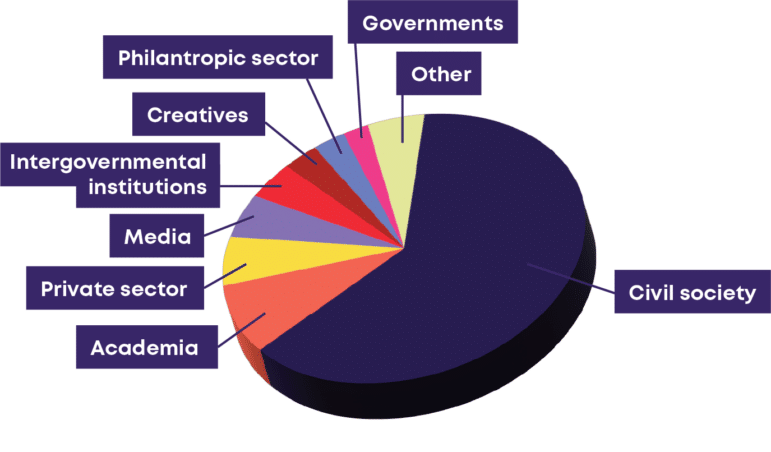
Stakeholder group
63% from civil society
9% from academia
6% from private sector
5% from the media
4% from intergovernmental Institutions
3% from creatives
3% from the philanthropic sector
2% from governments
5% from other sectors
Gender
54% woman
37% man
3% nonbinary
<1% genderfluid, two-spirit, bigender, pangender, agender
Role at RightsCon
46% were session organizers, speaker, and/or facilitator
54% were participants
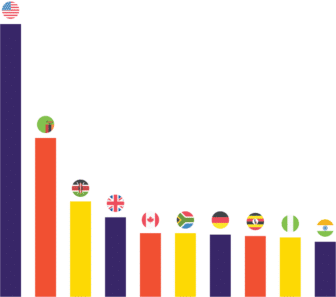
Top countries
189 – United States of America
110 – Zambia
66 – Kenya
55 – United Kingdom
44 – Canada
44 – South Africa
43 – Germany
42 – Uganda
41 – Nigeria
38 – India
Participation type
61% were planning on attending in-person
33% were planning on attending online
6% on both
Once again civil society represents the majority of surveyed participants, two thirds of the total. At the same time, input from intergovernmental institutions doubled. Additionally, most responses recorded came from the region of Africa and these insights are unsurprising within the context. It underscores how much both the local community and the wider region was anticipating RightsCon in Lusaka.
Impact
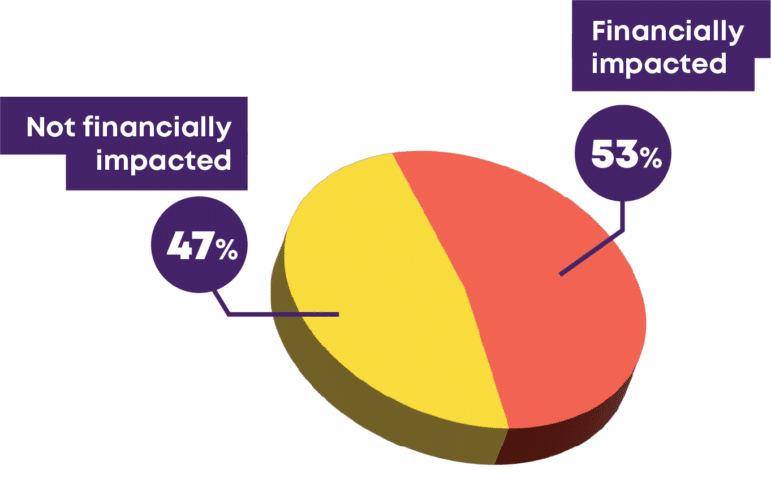
Financial impact
53% were financially impacted by RightsCon not taking place
47% were not financially impacted
Scale of financial impact in US dollars
46% between $1,000 and $5,000
20% between $100 and $500
15% between $500 and $1000
7% less than $100
6% between $5,000 and $10,000
5% more than $10,000
Other ways participants were impacted
29% Networking opportunities
22% Opportunity to consult stakeholders
20% Opportunity to showcase my work or receive feedback
17% Potential funding opportunities
5% Wasted travel time
3% Other
2% Was not impacted
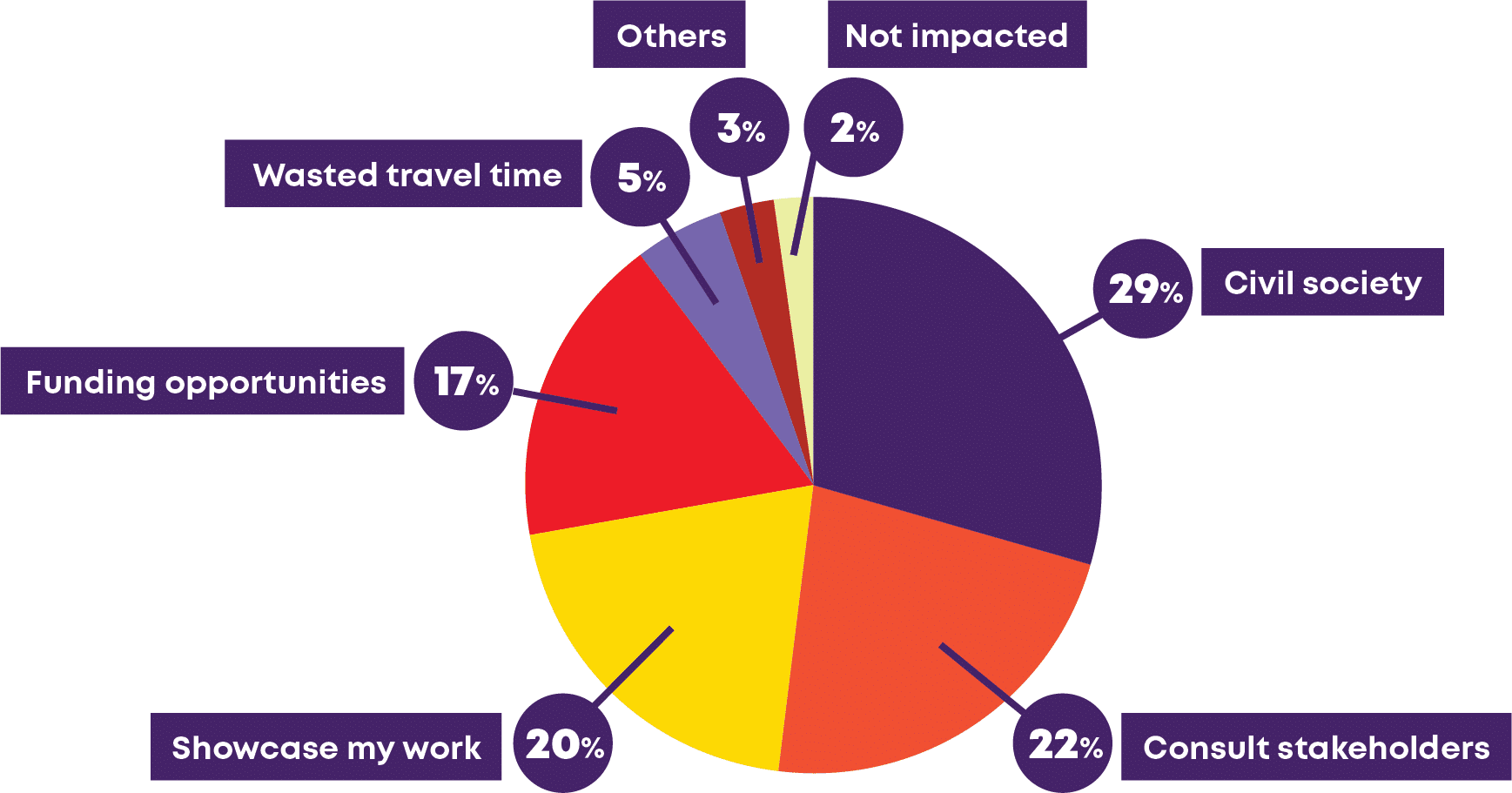
These responses help us understand the tangible financial loss and intangible opportunity cost that the community experienced when RightsCon didn’t move forward. It also illustrates what coming to RightsCon represents: building real connections, sharing knowledge, and unlocking resources. These have always been the backbone of the event, and as we chart the path forward, we’ll ensure they remain at the center of the experience.
Pathways for 2026
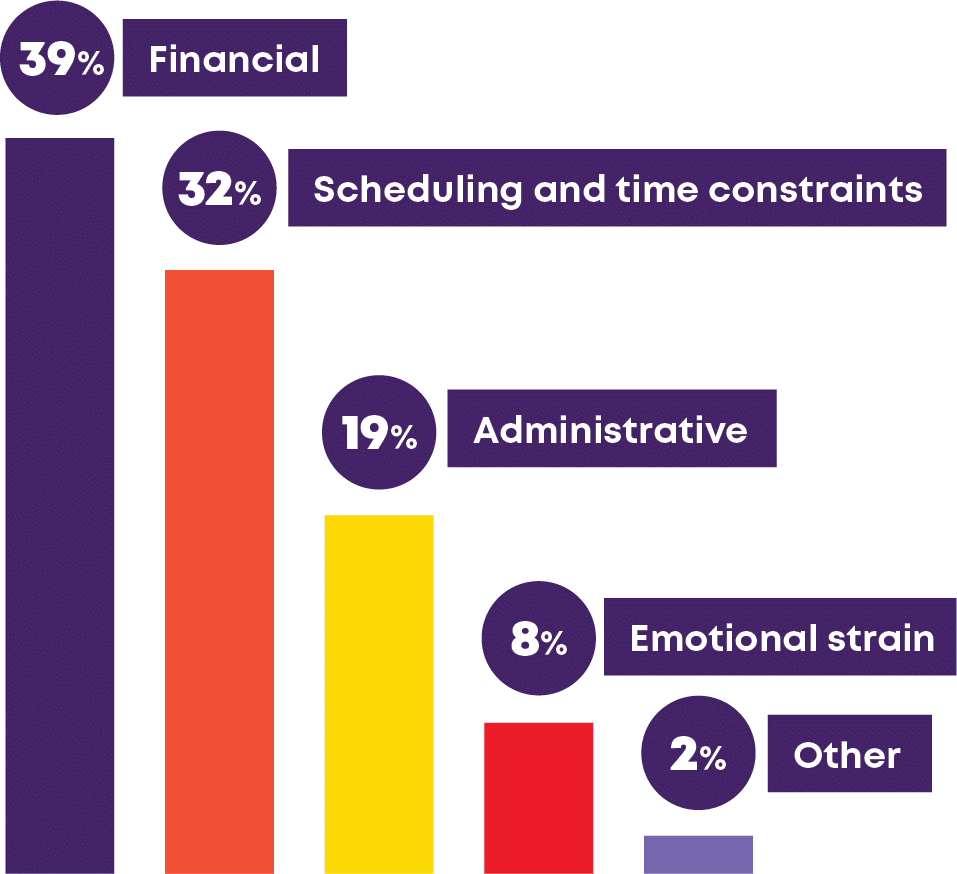
What would be the biggest barrier(s) to you attending RightsCon in-person in 2026?
39% Financial
32% Scheduling and time constraints
19% Administrative (including visa and travel planning)
8% Emotional strain
2% Other
As a session organizer, would you be interested in hosting your existing session if RightsCon was hosted elsewhere in 2026?
68% Yes
16% Depending on the timing
15% Depending on the location
1% No
Would you be open to attending RightsCon if it was rescheduled at a later time in 2026?
58% Yes, if there is an in-person attendance option
27% Yes, if there is an online attendance option
13% No, I prefer to wait until the next RightsCon in 2027
2% I will not be attending
It’s clear that there’s an appetite to connect in some shape this year, preferably in-person. This is very valuable as we organize and structure our plans for the remainder of 2026. At the same time, we recognize the significant barriers participants may face in planning for an in-person gathering within a short time frame.
Looking at our current model
RightsCon has been intentionally rotating regions and hosting the summit every year. In the event we need to reprioritize our model, what is more important to you?
51% Both are equally important
37% Having RightsCon every year
12% Rotating regions for each RightsCon
The majority of the community really sees the value in the existing model of rotating regions and hosting RightsCon annually. It’s interesting to see that between the two options, hosting annually is viewed as the most important by one third of the community, while rotating regions is viewed as more valuable by one eighth of surveyed participants.
Since RightsCon Costa Rica in 2023, we started offering both in-person and online participation modes. To better understand the needs of the community, which mode do you feel is the most important to you?
47% In-person
47% Both are equally important
6% Online
Last year, we saw a flip in our participant numbers: where in Costa Rica we had more online participants than in-person, the opposite was true for Taipei. We know the online component greatly increases accessibility and at the same time, we continue to hear from our community about the decreasing appetite for online or majority online events.
What the community had to say
The quantitative results above provide a broad overview of the community’s opinions and perspectives. However, to gain a deeper understanding of participants’ contexts, individual experiences, and reflections, we also conducted a qualitative analysis of the survey responses.
Out of the 1,408 replies, 647 participants took the time to provide additional written feedback. Our team carefully reviewed every submission below and we broke down the main themes that emerged. We grouped them into 5 high-level categories: Constructive feedback and improvement suggestions (311 replies), Positive feedback and affirmations (243 replies), Challenges, requests and other feelings (87 replies), Questions and clarifications (20 replies), and Other (60 replies).
The majority of comments we received fell into the Constructive feedback and improvement suggestions category, encompassing topics like the location selection process, location suggestions, thoughts on our cadence and timing, reflections on the RightsCon model, programmatic suggestions, interest or suggestions for RightsCon in 2026, and communication and community suggestions.
Positive feedback and affirmations were the second biggest category with messages of support and heartfelt testimonials from participants. Challenges, requests and other feelings highlighted the financial impacts, requests for financial support, and grievances and complaints. Questions and clarifications were mostly related to refund inquiries and requests for more clarification on the situation in Zambia.
Below you can find a few community quotes from some of the most recurring themes we found in the replies:
On our region rotation model
“As much as discovering new countries and cultures is also part of the experience, ensuring the smooth operation of the conference should be the main focus. For this reason, maybe the team should revisit the idea of organising it every year in the same place.”
“I understand the importance of rotating continents, and as someone from Latin America, I know that some venues can be quite expensive to reach. Strengthening local communities is essential, and hosting RightsCon within their own regions can be a powerful way to do that. Perhaps you could consider alternating formats—holding a larger, centralized conference every two years in a fixed location, and in the intervening years, organizing a smaller event that rotates across continents. (RC Asia, RC Africa and so on).”
“Exploring hybrid or decentralized models, such as regional hubs or parallel local convenings, could help ensure continuity and inclusivity even in uncertain situations. This would allow participants, particularly from underrepresented regions, to still engage meaningfully despite global or political constraints”
On our location selection process
“While the postponement of RightsCon in Zambia is disappointing, it also highlights the significance and impact of digital rights work. Reactions of this scale often indicate that the issues being addressed are both relevant and influential, which suggests progress in the right direction.
That said, this situation points to the need for a more nuanced, context-specific political analysis when planning such events. Beyond formal stakeholder engagement, it is important to understand the informal power structures and underlying decision-making dynamics within host countries, as those not always visible may ultimately shape outcomes.
This setback should not deter efforts to host RightsCon in Africa. The continent remains a critical space for these conversations, and future attempts should continue, with strengthened contextual awareness and strategic planning.“
“I would encourage RightsCon to strengthen risk assessment and contingency planning, particularly when hosting in politically sensitive contexts, to avoid last-minute disruptions of this scale. Clearer and earlier communication with participants would also help mitigate the financial and logistical impact on attendees, especially those traveling long distances.“
On ways to strengthen the ecosystem and keep the community engaged
“I am so disappointed [that RightsCon 2026 in Zambia] fell apart in the end and do hope that some online convenings still happen – it can still have an impact to move things forward. Maybe not as a conference per se with everything happening at once but lots of scheduled convenings throughout the calendar on different topics? Also some sort of online community where we can share news and opportunities, and get together in trusted, private spaces.”
“There is an opportunity to shift from convening conversations to strengthening ecosystems. This means supporting regional and local infrastructures where dialogue, strategy, and action are already happening—sometimes informally, often without visibility, but with deep relevance to communities. It also means recognizing that participation should not be defined by the ability to attend a global event, but by the ability to shape agendas from where people are. There is also space to rethink how continuity is held. Many of the relationships and ideas that emerge around RightsCon risk losing momentum without a structure to sustain them. Supporting year-round engagement—through regional networks, collaborative platforms, and shared spaces for ongoing exchange—could ensure that the energy of the community does not depend on a single moment in time.”
On strategies to host RightsCon in 2026
“I am not sure it is realistic to try to pull off a 2026 Rights Con in person given global conditions including those tied to air travel. However, in line with what some major conferences did during COVID an option could be to schedule some RightsCon events and panels online. A particular theme area could be allocated a particular day of the week to make it easier for people to watch.”
“If possible, I would suggest hosting RightsCon in alignment with MozFest 2026 in Barcelona/Spain (late October or early November 2026) or before the Internet Governance Forum in Nairobi in December 2026.“
“Authoritarianism is testing us but this is our moment to decide who we are. We can retreat into silence, or we can stand firm and push forward with conviction. Rescheduling RightsCon 2026 is not just logistics; it is resistance. […] And to our community, it says this: we do not shrink under pressure; we rise, we organize, and we come back stronger”

Reflections and looking ahead
RightsCon has never been just an event or a date on a calendar. It is a space we have built together with partners across the world to strengthen a rights-respecting digital future. What we witnessed in Zambia is not simply a logistical challenge; it is a clear reflection of the environment we are operating in, where pressures on civic space are increasingly shaping how and where people can gather, organize, and speak. This moment does not change our direction; it clarifies it.
For years, we have worked alongside partners to push back against digital authoritarianism and to protect those most affected by it. What happened here reinforces why that work matters and why spaces like RightsCon are essential. We will ensure that the conversations, connections, and actions that were meant to happen do not disappear, but continue in ways that are deliberate, resilient, and harder to constrain.
RightsCon is neither the beginning nor the end of our community’s work, but an essential part of a broader and dynamic digital rights ecosystem. We recognize our responsibility to this community and remain committed to creating spaces for connection, collaboration, and collective action this year. While RightsCon 2026 will not take place in Zambia, we will move forward with a more decentralized approach for the remainder of 2026, building on the collective momentum and resilience that has been displayed in both the lead up to the summit, and in the aftermath of our announcement.
In the coming weeks, we will share more about our plans for the remainder of the year. Please know that your feedback, reflections, concerns, ideas, and encouragement are actively shaping the activities and projects we are now designing.
Once again, we want to express our deep appreciation for the support, trust, and solidarity the community has shown over the past months. We move forward knowing that thousands of people continue to stand alongside us in strengthening the digital rights movement and building a more connected, resilient, and powerful ecosystem together.
The future of RightsCon is being written right now and we need as many people and perspectives as possible to shape what comes next. Thank you for contributing yours.
Keep up to date with RightsCon
Sign up for our newsletter to get updates on our next steps.
Get in touch with us at [email protected]