December 12, 2025 • Program • 14 min read
Written by: Sarah Abraham, Senior Program Coordinator
The RightsCon program is shaped with and in service to our global, multistakeholder community. Ahead of each summit, our Call for Proposals offers a window into the emerging priorities, challenges, and innovations at the intersection of human rights and technology. As we prepare for the 14th edition of RightsCon (May 5–8, 2026 in Lusaka, Zambia and online), we’re sharing key insights into the trends gaining momentum, the regions stepping into the spotlight, and the complex converging issues that will guide our work in the years ahead.

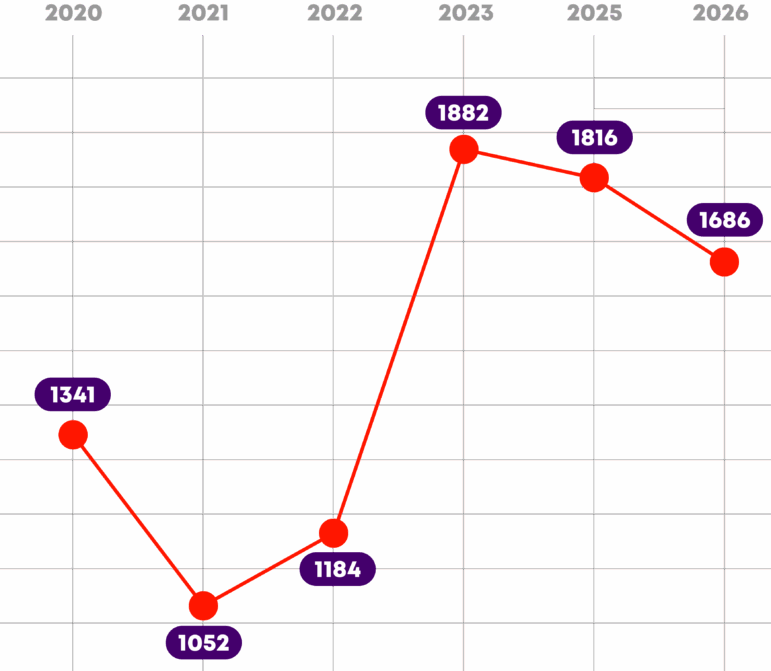
Number of session proposals per year
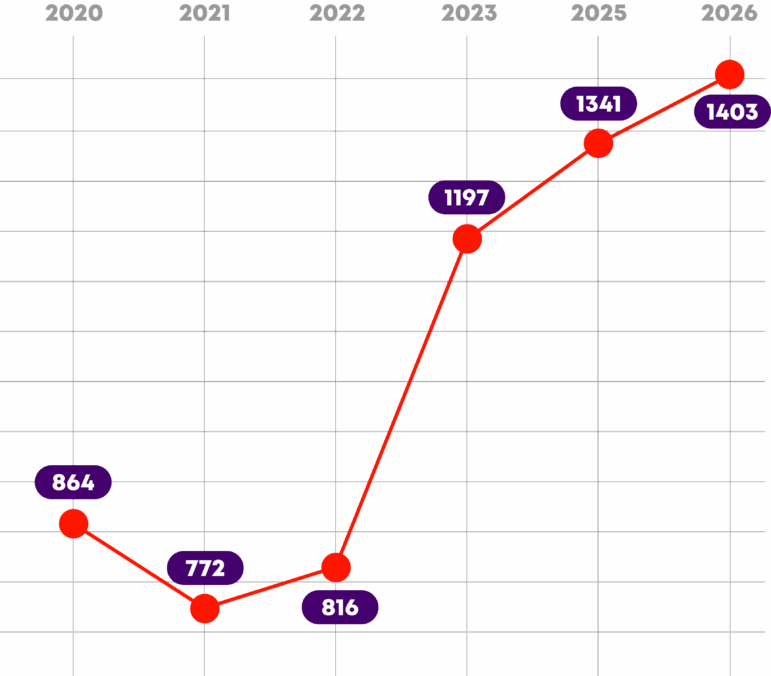
Number of host institutions per year
Number of countries per year
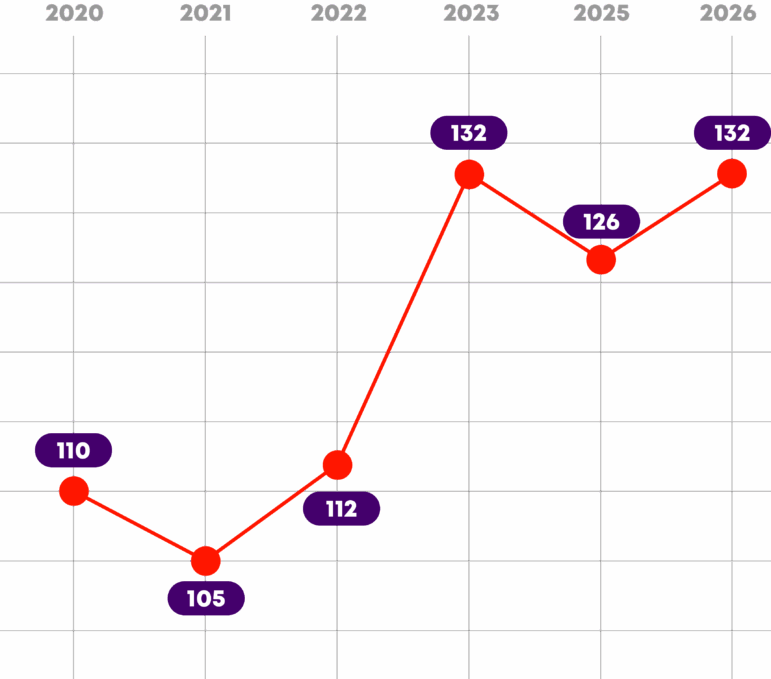
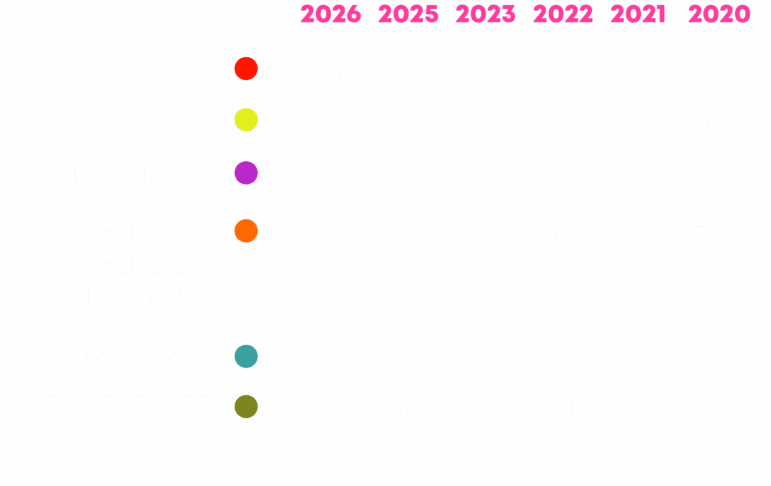
Our program is a living record of our community’s growth and transformation over time. This year, we received 1680+ proposals from session proposers representing 132 countries – with two-thirds coming from submitters who have never participated in RightsCon before, and a third from returning members of the community. This mix of new and veteran voices, combined with the shared drive to connect and collaborate is a vital part of what keeps RightsCon a vibrant, diverse, and dynamic space year after year.
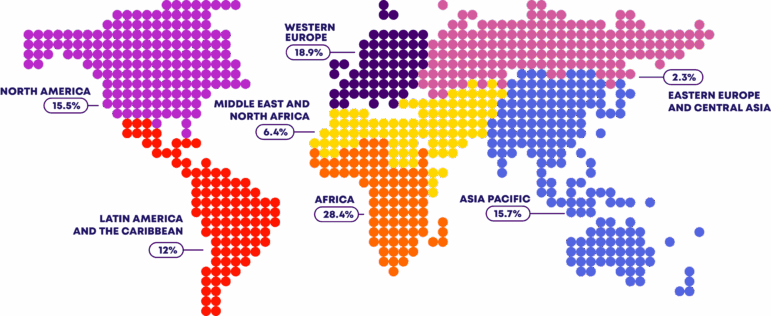
In recent summits, roughly half of our session proposers have come from the Global Majority, a distinction we celebrate as we continually work to build an inclusive program that represents the RightsCon community. This year, that representation grew even further: two-thirds of proposers identified as from countries across the Global Majority. We welcome this shift, seeing it as a reflection of the deepening ownership of the digital rights agenda by the communities most directly impacted by technological change.
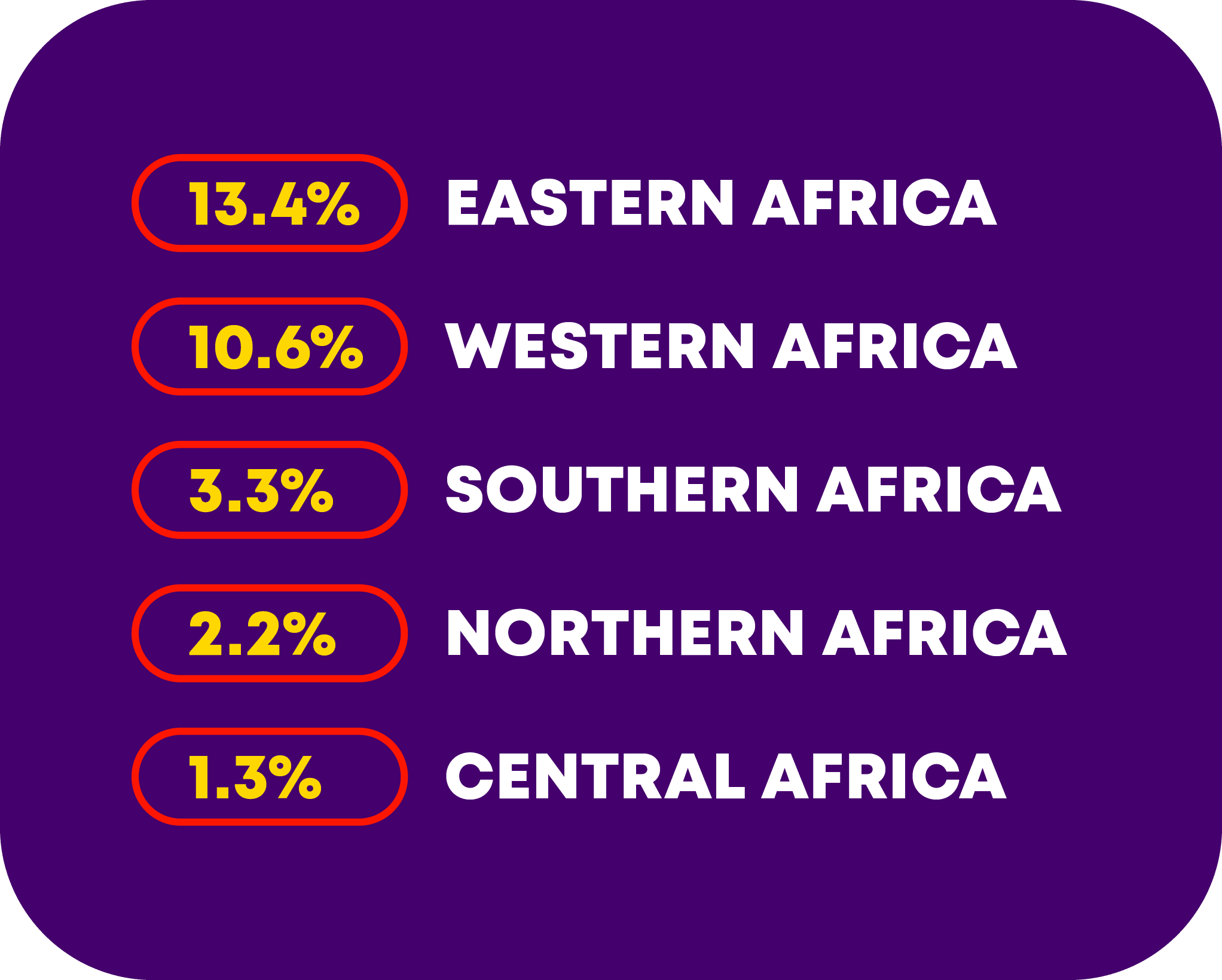
As RightsCon returns to the African continent, we’re heartened to note a strong rise in representation from the region. Session proposers from across Africa almost doubled, from 16 percent at our last summit to 28.4 percent this year, bringing with them highlights of the work happening across African digital rights movements, and making sure that issues most urgent to communities across the continent — themes centered on resisting digital authoritarianism, from defending the right to protest online and offline, to push back against internet shutdowns —are brought to the forefront of the conversations that will unfold in Lusaka and online. This increase coincides with a decline in the proportion of session proposers from North America, dropping from 22 percent in 2025 to 15 percent for our 2026 summit. At the same time, we see a modest but meaningful increase in participation from the MENA region and sustained regional proportions from Europe, Latin America, and Asia Pacific.
A note on regional terminology: RightsCon has traditionally used regional categories that align with Access Now’s other programmatic work and the classifications used by other global organizations. One of these regional categorizations is the term MENA (Middle East and North Africa). Members of our community have shared feedback with us about this terminology and how it reflects their identities. While a shift in how we name, categorize, and analyze our data will take some time and additional consultation, we want to share a transparent breakdown of where proposals are coming from, especially from our host region. As a result, you’ll notice we’ve included both our traditional regional classifications as well as a sub-regional breakdown for Africa, including Eastern, Western, Central, Southern, and Northern Africa. As always, we welcome input into our approach; you can reach out to us by emailing [email protected].

When the Internet goes dark: patterns, power, and pushback
RightsCon 2026 will mark a decade since the launch of the #KeepItOn campaign at RightsCon Silicon Valley, a milestone that comes with both hard-earned victories and reminders of how much work remains to end internet shutdowns worldwide. Even with years of global advocacy, 2024 was the worst year on record for internet shutdowns, and across Africa, shutdowns have doubled in the last ten years. The Call for Proposals reflects how deep-seated the issue is, with many submissions pointing to the way governments are increasingly using shutdowns to restrict access to information and curb mobilization during elections, protests, school exams, and moments of crisis. Proposals in this category put forward methods to seek accountability, including strategies for implementation of court rulings deeming shutdowns a violation of fundamental rights. Others focus on improving methods to detect and measure both generalized shutdowns and targeted throttling, while others look at the broader infrastructure questions, from the human rights implications of undersea cables to the stark disparities between Global Minority and Majority countries in terms of cable resilience. We also see proposals questioning how to safely deploy alternative solutions such as satellite internet in conflict and crisis zones, where connectivity can be a lifeline but also carries serious risks.
Strength under strain: reinventing sustainability in uncertain times
Civil society is resisting and adapting under pressure. Recent funding cuts, resource constraints and a volatile geopolitical environment have steadily shifted the operational landscape for NGOs, independent media, and the humanitarian sector – a change we see reflected in the steady rise of submissions to our ‘organizational capacity and funding’ program track. Across regions, organizations are rethinking what sustainability looks like. Many are moving beyond traditional donor models and experimenting with new approaches grounded in solidarity and community power: cooperative structures, income-generating projects, membership giving, community fundraising, and impact-oriented investments. At the same time, many session proposers are sounding the alarm about a parallel trend: governments weaponizing financial systems to restrict civic space. We hear from groups facing frozen bank accounts, punitive anti-NGO laws, criminalized foreign funding, and tensions on financial institutions to shut down civil society operations. Proposals explore practical ways movements are financing themselves in the face of these strains and finding alternative channels for sustaining their work. These submissions, looked at holistically, capture a moment of both challenge and solidarity, as civil society transforms in the face of mounting pressure.
Who shapes the future? Power, sovereignty, and the push for fair AI
Following the recent launch of the UN Global Dialogue on AI Governance, a key commitment of the Global Digital Compact, we see submissions exploring developments in AI regulation, applying a comparative lens to regional frameworks to assessdissect how governments are balancing innovation with oversight, as well as privacy and ethical safeguards with economic competitiveness. Relatedly, session proposers look to take stock of the pursuit of digital sovereignty, particularly in the Global Majority, and advance actionable strategies to provoke the infrastructural development needed for communities to reclaim control over their data, networks, and local platforms. Central to this work, proposers are calling out the concentration of power in Big tech, its outsized influence on the digital sphere, and calling for meaningful engagement with civil society. Across these threads, there’s a it’s clear theme: there is a need for multistakeholder action that brings together the private sector, policymakers, civil society, technologists, and philanthropists together in to dialogue toand collaborate towards a more equitable digital ecosystem.
Under pressure, still persisting: Defending LGBTQ+ rights in the digital age
Across many parts of Africa and in other parts of the world, LGBTQ+ communities are facing a rollback of progress, along with a rise in political intolerance. Activists submitted sessions calling out the escalating weaponization of laws to target, surveil, and marginalize LGBTQ+ people, pushing back by sharing practical tools, health and psychosocial services, research, and resilience strategies to help communities navigate discriminatory legal and cultural systems. Expect to hear from actors exposing the links between disinformation campaigns and offline harms, fighting for stronger data protections for LGBTQ+ people on dating platforms, and promoting methods to safeguard LGBTQ+ rights in the design and development of AI. If you’re a member of the LGBTQ+ community from any part of the world planning to join us in Lusaka, please send us an email note to [email protected]. Our team can connect with you directly and share more information about the context in Zambia and how to prepare for your participation.
Examining AI’s footprint: Energy, labor, and extractive infrastructures
What is the environmental cost of the surge in data extraction and processing required to build AI? Proposals look into the true costs of AI, especially in the Global South, where much of the infrastructure and labor is concentrated, examining its environmental footprint alongside the labor and energy demands that make these systems possible. Submissions explore the socio-environmental impacts of data centers and their role in global production chains, bringing together climate justice, environmental, and digital rights communities to develop tools and strategies for assessing AI’s broader impacts. Others shine a light on the exploitation faced by downstream AI workers, from data labelers to annotators, who often operate under opaque outsourcing systems and unregulated gig labor conditions, putting forward strategies for organizing, building worker power, and pushing for fair, transparent labor standards. In the same vein, Indigenous activists are raising awareness on the importance of Indigenous-led data in environment and human rights due diligence processes in the context of operations affecting indigenous peoples and their territories.

There’s much more to come for RightsCon 2026! If you proposed a session, our team will notify you about the final status of your proposal in late December.
As a reminder, registration is open, with early bird tickets available until February 20, 2026. If you submitted a session idea that is accepted into the program, you’ll receive a menu of discount codes (reserved for session organizers, speakers, and facilitators) which apply for both online and in-person ticket types. While you wait, check out our Plan Your Travel page for guidance to help you prepare for your visa application, flights, hotels, and more!
Questions about the program or participation? Send us an email at [email protected].