As RightsCon Online (July 27-31, 2020) quickly approaches, we’re laying out in more detail the core policies, principles, and processes that we’re working within to maintain safe, productive, and inclusive spaces for the summit week.
As with every previous summit, RightsCon Online is governed by our Code of Conduct and Participation & Privacy Policy. By registering, participants agree to read through and abide by these policies.
Our approach
We understand that RightsCon Online looks a little different than previous years, and this requires refining our policies and reaffirming our response mechanisms to fit this new environment. Virtual sessions replace in-person meetings, while one-on-one or group chats and discussion forums provide an online alternative to informal coffee chats and hallway conversations. The safety and wellbeing of our community remains our priority, and achieving this in an online conference requires us to err on the side of caution in our response processes. As we navigate this new setting and learn how best to reach our goals within it, we ask for understanding and support from the community.
In an in-person setting, our team focuses on providing a safe and secure venue for the RightsCon community to gather. For RightsCon Online, we are taking a similar approach to the conference platform, doing what we can to promote broad participation while also putting certain checks in
Every year we hold the world’s leading summit on human rights in the digital age. For its ninth edition, RightsCon 2020 will take place entirely online. From Monday, July 27 to Friday, July 31, 2020, we invite you to sign up, log in, and join us. Registration has been extended to close on Tuesday, July 21!
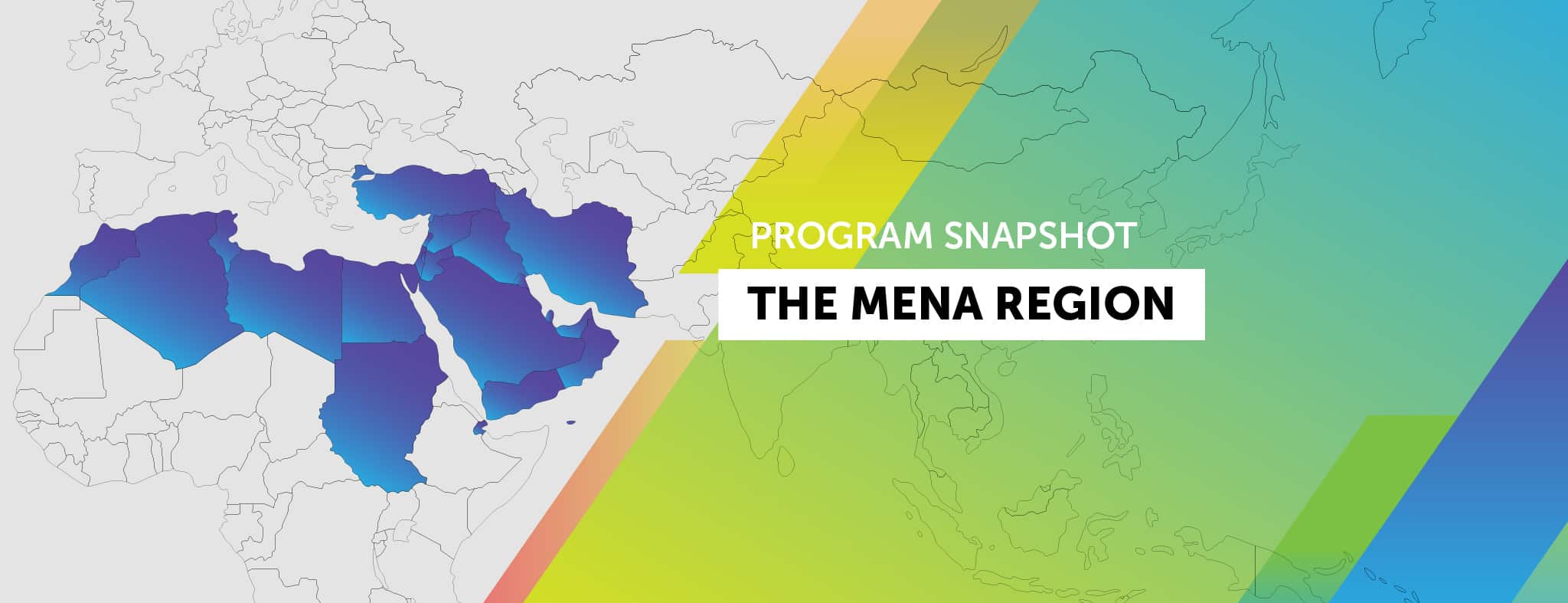
We are bringing together the world’s leading expert technologists, human rights defenders, government representatives, and academics to cover issues ranging from connectivity and internet shutdowns, to protest and participation, peacebuilding, development, and humanitarian response, disinformation and online hate, and much more. We have just launched our program, which includes an exciting number of dynamic, and in-depth sessions on digital rights issues in Middle East and North Africa region:
- Data collection and open source investigations: advancing accountability and justice in the Middle East (Tahrir Institute for Middle East Policy; Eshhad)
- Dissecting the (not so) democratic drama: reflecting on the digital manipulations and political persecutions in the Tunisian 2019 elections (Bloggeurs sans Chaines)
- They don’t really care about us: social media platforms and disinformation in the Arab World (Oxford Internet Institute)
- Behrouz Boochani: writing No Friend But the Mountains from Manus prison on WhatsApp (ARTICLE 19; Berkman Klein Center for Internet & Society at Harvard University)
- Can you hear us? Internet shutdown in Iran, what have we learned? (NetFreedom Pioneers: Toosheh/Knapsack For Hope)
- Filterwatch: how state policies and private companies undermine digital rights in Iran (Small Media Foundation)
- Virtual Field Visits and Contextualization for

Today we released the public session list for RightsCon Online, the ninth iteration of our summit and the first-ever to be hosted entirely online. The session list is your first look at what to expect from RightsCon Online – 250+ sessions, supporting perspectives from 106 countries, and set to take place across all time zones and regions of the world.
In many ways, RightsCon Online is a turning point in our approach to convening. The curation of our public program required constant iteration and questioning, as the impacts of the COVID-19 pandemic rippled across different countries and contexts. How would we capture the magnitude of the human rights issues that drive our community to action in 2020? How would we provide an online platform that would allow people to connect, collaborate, and look ahead to the next year and the next decade?
In searching for answers, we returned to the core of our mission: providing a platform to strengthen the work of a community of activists, policymakers, business leaders, journalists, and researchers who are defending and extending human rights in the digital age.

Creating an online program in a moment of transition
In 2020, we received a record-breaking 1330 proposals through our Call for Proposals. By the time we announced the postponement of RightsCon Costa Rica in March, we had nearly completed our program review and session selection process for an in-person summit experience.
When we decided to pivot to an online summit, we knew that the Call for Proposals would form the foundation for our programmatic approach. We reopened our review for a second round, and revised our session selections based on the
readmore
As the RightsCon community has grown, upholding its diversity and representation has remained our highest priority. Involving a wide range of regions, gender identities, and perspectives is essential for facilitating and building a shared agenda for our human rights in the digital age.
Every year, we’ve worked toward this goal with a few different initiatives, including through an inclusive ticket discount policy, by offering travel support funding to session organizers and speakers, and facilitating often burdensome visa application processes.
Transitioning RightsCon online this month offers an unparalleled opportunity to expand representation – it's one of the reasons we're offering free registration – but it also requires participants have access to a quality internet connection to meaningfully engage.
For RightsCon Online, we're launching a new Connectivity Fund to provide direct financial support for participants to connect and engage.
Session organizers, speakers, and participants can apply for three levels of funding support ($50 USD, $100 USD, or $150 USD), which they can use for:
- Direct connecting: Purchasing data top-ups or contributing to the cost of internet use;
- Support connecting: Travel to internet cafes or community centers to access computers;
- Secure connecting: Supplementing secure participation, by purchasing privacy screens or VPNs;
- Other support: Cost of childcare or other services enabling active engagement.
How it works
The Connectivity Fund is application-based and, as always, we will make funding decisions with a focus on amplifying the participation of underrepresented communities. In recognition that there is no one-size-fits-all model for supporting connectivit
Registration is now open for RightsCon Online (July 27-31, 2020), the ninth edition of the world’s leading summit on human rights in the digital age, and the first to take place entirely online.
The summit will be held across five days from Monday July 27, 2020 to Friday July 31, 2020, featuring a program with 200+ sessions and 8+ tracks, spanning multiple time zones, with both live and asynchronous content, so you'll be able to join from wherever you are.
When we announced we were bringing RightsCon Online, we emphasized the importance of convening – particularly in this moment – as a tool for connecting, strategizing, learning, and moving forward a collective agenda for human rights. We reaffirmed our commitment to providing a platform for a community of experts that is grounded in the same guiding principles of diversity and inclusion that inform our usual ticket discount policy. This year, in light of a shortened registration window and the challenges many in our community are navigating, we've opted to waive registration fees for RightsCon Online.
Hosting RightsCon Online to the same standard and quality as an in-person summit does however require significant investment. For this reason, at the end of the registration process, we’ll invite those with the means to contribute – representatives of the private sector or those who have event or travel-specific budgets, for example – to consider supporting the cost of the event and their participation.
 Registration is availabl
Access Now is excited to announce that, for the first time, RightsCon will take place entirely online. From Monday, July 27 to Friday, July 31, 2020, we invite you to sign up, log in, and join us for the ninth edition of the world’s leading summit on human rights in the digital age.
2020 is fast becoming the year defining the decade ahead. We are facing a demanding set of challenges and if recent events have taught us anything, it’s this: we are only as strong as the communities we build around us. From the COVID-19 pandemic to #BlackLivesMatter, from the internet shutdowns in Jammu and Kashmir to the global climate crisis and the protests in Hong Kong, the movement for human rights requires all of us, together.
RightsCon Online reflects this revolutionary spirit. A global iteration of our Summit Series, it will provide a critical platform for what is required in this moment: thousands of experts connecting, coordinating, and advancing a shared agenda for the future. Over the course of five days, our community-sourced program will convene technologists, business leaders, activists, policymakers, journalists, and academics who are committed to a vision of justice, equity, and structural change. And we want you to be a part of it.
The extraordinary moment we are living through reminds us why we do this work and why convening matters. When we asked our community what was needed most in this time, the responses reaffirmed the value of RightsCon as a space to connect, strategize, and learn from others. We heard from more than 700 individuals across 100 countries and 10 sectors – and 90 percent told us that if we brought RightsCon online this year, they would make that leap with us. As we build toward RightsCon Online, every decision we’ve made, every step we’ve taken, has come back to that s
Last month, we put a call out to our network asking for support in shaping how we’re bringing RightsCon Online. The results were an inspiring demonstration of the need for connecting our community this year and we want to share them with you.
We received over 700 responses from 100 countries across 10 sectors. The below infographics capture the survey highlights, sharing an overview of the responses and providing insight into the perspectives received from our session proposers.
When breaking down the demographics of survey contributors, we were excited to see representation that mirrored the participation we’ve had during previous years of RightsCon. The enthusiasm for RightsCon Online was encouraging, too: 90% of respondents were either likely or very likely to participate in a virtual version of our summit.
For us, it was telling that the majority of responses indicated a desire to see the in-person objectives of RightsCon – strategizing, connecting, and learning – come alive online.
Another compelling insight is what issue areas are mo